
How the Conservatives won Wandsworth
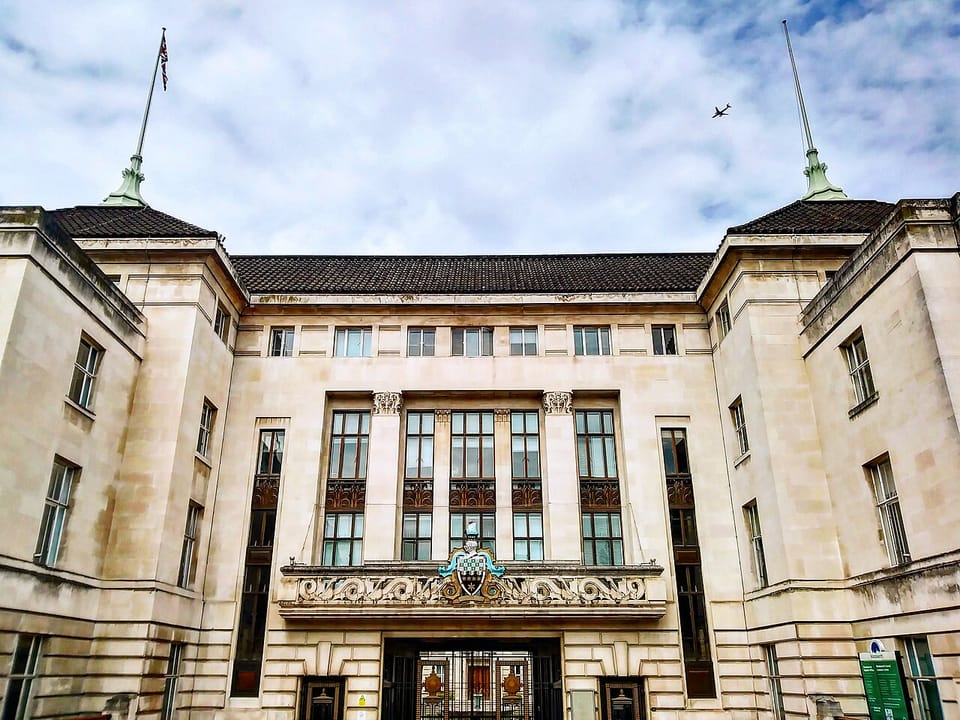
Labour's loss of Wandsworth was portrayed as a positive for the Tories, who were seen as 'winning' back one of their flagship councils. Along with Westminster, plenty of coverage was given to the result. And it interested me, too. I was a councillor there for (too) many years, it is still my home, and it was not the result I was expecting.
Before election day, I was fairly confident Labour would be re-elected. There was, I thought, a decent chance that some Greens might win seats, and an outside chance they may even hold the balance of power. But the Tories as the largest party was not something I would put money on. In my defence, I had little local knowledge to inform that, mostly the candidate selections, which can give a clue which wards the parties consider winnable (one of my local Conservative candidates had been posting on social media about standing down from the council, which was a pretty big clue he was only a paper candidate). What I thought I had was a long-term trend.
The long-term trend
Coming into this election I thought the trend was favouring Labour, not just because London has become more pro-Labour, but also because the (near) unique local attraction to the Tories was waning.
Going back to 1990 the Tories in Wandsworth have tended to outperform the national party. 1990 is a key year. In 1986 they nearly lost the council. They lost the popular vote but won 31 council seats to Labour's 30. In 1990, though, they had the poll tax on their side. Levying a zero poll tax that year saw them win 48-13, despite the national unpopularity of the Thatcher government.
They continued to defy the national political gravity, retaining control in 1994 (45-16) and 1998 (50-11). Their low-tax policy, supported by transitional arrangements that allowed them to keep their council tax artificially low, seemed to be a vote winner. However, the impact seemed to be diminishing. If you look at their vote share compared to national polling (and in 2010 the general election held on the same day as local elections), the Wandsworth effect seemed hold for a few elections, then start to drop until 2018, when the Tories locally were actually less popular than the Tories nationally.
The graph shows the difference. In 1998, a year after the Labour general election landslide, Wandsworth Tories polled 26.1% more than the national party, Labour polled 17.8% less than their national party. However, as time progressed, that effect diminished. By 2018, the Tories underperformed by 3%. People may have forgotten about their bills from more than 30 years before, and the other side of the Wandsworth promise, high-quality services, may have rung hollow after eight years of austerity. The Tories retained control (33-26) but, like 1986, lost the popular vote (38.3%-38.7%).
So, until 2018 it looked like a good theory, and its strength was reinforced by a similar trend existing in the figures for Westminster, who had also set a zero poll tax and followed a low-tax policy. When the Tories lost Wandsworth in 2022, I just assumed it was a continuation of the trend and never looked at the numbers. If I had, I'd have noticed that the Tories, even though they had lost, seemed to be regaining some of their previous lustre.
What happened in 2022?
The idea of a trend, with a plausible explanation, is strong. so I'm not quite prepared to give up on it. 2022 (and 2026), however, requires an explanation. And I think it's that the Conservatives have hit their floor.
This may be refining and improving a hypothesis. Or it might be selection bias, finding facts to match my theory. However, the downward trend cannot continue forever, however much some might wish it were the case, the Tories can't get negative votes. At some point the local Conservatives will find a level at which they track the national party. It's unclear where that might be and if they are there.
The second is that they will have a core vote, a floor. There are some people who will never do anything but vote Conservative. If the group of voters represents a bigger proportion of the Wandsworth than the national polling, then they will outperform the national party.
In 2022 the Tories got 92,566 votes. In 2026, despite a higher turnout, they got 90,719 votes. Their national polling was around 22.5% and 18.5% respectively, the lowest in any of the council elections. Had they continued at -3%, the same Wandsworth effect as 2018, they could only have expected around 57,000 and 37,000 votes respectively. That suggests their core vote is certainly higher than 22.5%.
We can roughly calculate how many people vote Conservative in council elections, by adding the votes of the highest placed Conservative in each ward. This is only a minimum though, since some people may have voted for the second or third placed Conservative, and not the first, but it gives an indication. We also have two general elections where the Tories did badly, 1997 and 2024, as a comparison.
| Election | Cons vote | Turnout adj. | National Cons poll |
|---|---|---|---|
| 1997 general election | 48,300 | 48,300 | 30.6% |
| 2024 general election | 32,291 | 32,291 | 23.7% |
| 2022 council election | 32,830 | 51,795 | 22.5% |
| 2026 council election | 33,178 | 44,742 | 18.5% |
I don't think this proves the argument one way or the other, but it's notable how the actual Conservative votes are in the 30-35,000 bracket for three elections, despite a 5% range in the polling.
The adjusted figure attempts to make the votes comparable, increasing the 2022 and 2026 council figures to a turnout of 65%, around that of a general election. This is interesting because it would suggest that the Tories should have got more votes in 2024.
There are lots of variables and unknowns in all this. But it I think it's some evidence that in Wandsworth, the Tories can't go any lower in terms of votes, and still leaves open the question of what would happen to their council support if and when the Tories nationally become more popular.
How did a party win with just their core support?
If the Tories are at their core vote, the obvious question is how on earth they can win. I think the Tories relative success in 2026, therefore, comes down to the oddities, or flaws, of the current electoral system.
One of the first is that the opposition vote was divided. Taking a (debatable) view that Labour, Lib Dems, and Greens represent the left, and the Tories and Reform, the right, there was a clear 60:40 win for the left in Wandsworth. But that did not translate to seats.
What was clear is that the Labour vote dropped significantly, from 112 thousand in 2022 to 98 thousand in 2026, and that was despite a higher turnout. The Conservatives only lost around 2 thousand votes between elections. But where did those votes go?
It's impossible to tell based on the results alone because the voting patterns are complex. Based on the raw numbers it's tempting to suggest that the Tories kept hold of their vote, while Labour voters abandoned them for Reform, the Greens, and the Lib Dems.
However, the increased turnout might make things interesting. If we were to adjust the figures from 2022 (I know I could use percentages, but I think using numbers better highlights the scale of change), to make the numbers directly comparable, a different picture emerges.
| Party | 2022 | 2022 adjusted | 2026 | Change | TOTALS |
|---|---|---|---|---|---|
| Conservative | 92,566 | 110,938 | 90,719 | -20,219 | |
| Reform | 0 | 0 | 21,443 | +21,443 | |
| RIGHT | +1,224 | ||||
| Labour | 112,574 | 134,917 | 97,997 | -36,920 | |
| Liberal Democrats | 15,599 | 18,695 | 26,472 | +7,777 | |
| Green | 18,546 | 22,227 | 50,310 | +28,083 | |
| LEFT | -1,060 | ||||
| TUSC | 218 | 261 | 145 | -173 | |
| Independent | 3,795 | 4,548 | 4375 | -116 | |
| Wandle Independent Group | 0 | 126 | |||
| TOTAL | 243,298 | 291,587 | 291,587 | – |
It is over-simplistic to suggest that all switching remained on the same side of the centre, but the numbers do have a rather nice symmetry. It also reinforces the argument that Labour's problem in London is largely from the Greens, and shifting to Reform – which seems to be their default response – is unlikely to help them.
What really helped the Tories, though, is how incredibly efficient their vote seems to be. There are lots of inequalities in the first-past-the-post system and this highlights it. Labour got more votes but fewer seats (remember 1986 and 2018). And it's because the Tories have a much more efficient vote.
If eight people had switched their vote from Conservative to Labour in St Mary's, and twenty-five had done the same in West Hill, Labour would have won a majority. Just thirty-two electors would have made a difference.
By comparison, to win the single extra seat to give them a majority, the Tories would have needed 117 people to change their mind in South Balham.
To further show how efficient the Conservative vote was, if you gave Labour those 117 magical switchers to scatter around, they could have used them to win five extra seats: St Mary's, West Hill, Trinity, Balham, and Wandsworth Town.
It's long been part of the Conservatives' success in Wandsworth, even in 2022, when they lost control, they clung on to seats by small margins. In St Mary's they were just 10 votes ahead of a Labour candidate, and 33 votes made the difference for them in Wandsworth Town.
The future?
The Tories perhaps deserve to celebrate their result. I think it was against the odds given their current polls and the wider trends in London. If they can be the largest party on just their core vote it might well give cause for optimism, too; the only way can be up.
However, I'm not sure I'd put money on them. Remember that red line on the graph at the beginning, showing the difference between the national polls and local party performance. Labour have been consistently trending up on that. Even in the current febrile state of Labour politics, they did better than you might expect. The spread of votes between the parties also suggests they have much more potential to gain voters from elsewhere. And, of course, although the Tory vote is more efficient, that also means that Labour will find it a lot easier to gain seats.
Four years is a long time in politics, but if I were to put money on a result for 2030, it would be a return to Labour control.